
Applications are open now. Members apply free. Apply now to be recognized at the Gala in 2027.
Applications are open now. Members apply free. Apply now to be recognized at the Gala in 2027.
There is a feeling many women recognize the moment it happens. You walk into a room, whether an office, a friend's house, a therapist's waiting area, and before anyone says a word, something shifts. Your shoulders relax. Your breathing slows. For the first time in days, or sometimes much longer, you feel as though you do not have to carry every responsibility, worry, or expectation by yourself. The room has not solved your problems, but it has given you something equally important. It has made you feel safe enough to begin.
Experiences like that are more uncommon than they should be. Many women can name only a handful of places where they have truly felt seen, heard, and supported without judgment. Others struggle to think of even one. Those spaces do not happen by chance. They exist because someone made the decision to build them with care, understanding that healing begins long before a conversation starts. Every detail, from the people who greet you to the services available, reflects an intention to help rather than simply treat.
The people who create those environments rarely seek attention for themselves. Their work takes place in counseling offices, behavioral health clinics, community programs, and organizations that quietly serve people every day. They spend years improving systems, training staff, solving problems, and making sure the next person who walks through the door finds the support they need. Success is measured less in recognition and more in the lives that slowly begin to change.
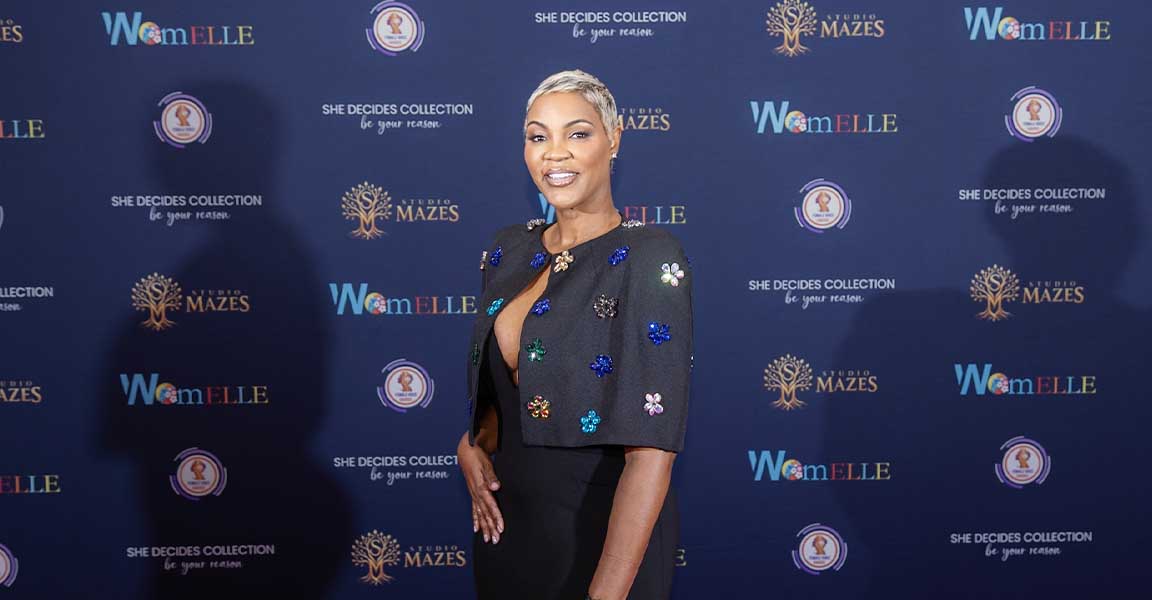
Dr. Nicole Odom-Hardnett has spent much of her career doing exactly that. As the founder and CEO of Focus Point Solutions, LLC dba Focus Point Behavioral Health she has built an organization that now serves communities across Maryland, Delaware, and Texas, with franchising creating opportunities to expand even further. Her journey, however, did not begin in behavioral health. It began with a willingness to notice what was missing, learn from every experience, and keep asking how things could work better for the people who needed help most.
The Long Way Here
Dr. Odom-Hardnett earned her undergraduate degree in business administration, but she never wanted to be one of those people who studies something and then walks away from it. So, she started experimenting. First came a cleaning company, where she and two employees prepared houses for sale or lease before new owners moved in. Then came an entertainment company, where she planned and hosted events around the region. Both ventures taught her something about running a business, but neither one felt like the reason she had gone to school in the first place.
The real pull toward behavioral health came from somewhere much closer to home. In high school, her best friend became addicted to cocaine after her boyfriend introduced her to it, and Odom-Hardnett watched someone she loved struggle without knowing how to help. Years later, working as a director of career services at a post-secondary education school, she kept getting calls from hospitals rejecting her students because their drug screens came back positive. Those conversations led to one on one meetings, and those meetings led students to open up to her about problems they were too afraid to name anywhere else. She started researching outpatient facilities on her own time, just to have somewhere to send them.
She entered graduate school in 2008 to study Human Services and found herself the only person in her cohort not already working in the field. The coursework assumed clinical experience she did not have, so she leaned on what she did have: her own history with therapy, with family members who struggled with addiction and mental health, and with the best friend she had once tried, without knowing how, to help. She would go on to earn a PhD in psychology, though she does not practice clinically. The title mattered less to her than the knowledge behind it.
While still in school, she built her first venture in the field, Never Alone Supportive Transitional Housing. She ran it with a business partner and quickly learned that partnerships rarely split the workload the way they are supposed to; she was carrying most of it herself while still working a full-time job elsewhere. She eventually closed the arrangement amicably, having concluded that she simply was not built for partnerships. The lesson stayed with her. She has not entered another one since.
The Company That Came Next
Focus Point Solutions, LLC was officially established in 2010, initially providing assisted living services with a commitment to improving the quality of life for vulnerable individuals. As the organization grew and the needs of the communities it served became increasingly evident, Dr. Odom-Hardnett expanded the company's mission.
In 2016, she launched Focus Point Behavioral Health as a trade name under Focus Point Solutions, LLC, marking the organization's expansion into behavioral health services. This evolution reflected her vision of creating a comprehensive, person-centered organization that addressed mental health, substance use, and supportive service needs through accessible, compassionate, and evidence-based care. Rather than replacing the company's original mission, the addition of behavioral health built upon its foundation of serving individuals and families with dignity, respect, and practical support.
The distinction is not academic. Behavioral health in the United States has been shaped by insurance requirements, licensing regulations, workforce shortages, and the historical prioritization of certain populations over others. What emerged, over the decades that built the current system, is care that often fails the people who need it most. Women receive less thorough evaluation than men for a range of behavioral health concerns. Black women, Latina women, immigrant women, and women navigating substance use or trauma face additional barriers within a system that has not been oriented toward them. The clinicians who staff these systems are frequently well-intentioned and often overworked. The clients who move through the systems frequently do not receive care that reflects their actual lives.
Dr. Odom-Hardnett founded Focus Point Behavioral Health to work differently. From the beginning, the practice was oriented toward clients who had been underserved by other providers, and around the specific kinds of care those clients needed. Substance use treatment. Behavioral health for women. Family-inclusive care that recognized how much of a woman's mental health is entangled with the health of her closest relationships. The practice took what Dr. Odom-Hardnett had learned in graduate school, combined it with what she had learned from her own family's encounters with the mental health system, and produced something that operated on a different set of assumptions than the norm.
The practice grew. It grew steadily rather than explosively, which is how most sustainable businesses grow, but the growth was consistent. New locations opened. New clinicians came on. The client base expanded across demographic and geographic categories. By the time Focus Point had reached its first decade of operation, Dr. Odom-Hardnett was managing a multi-location behavioral health organization that was serving thousands of clients annually and had established a reputation in the communities it served for the quality and cultural attunement of its care.
Around this time, she made two decisions that would shape the next phase of the work. The first was to develop a franchising model that would allow other qualified clinicians and administrators to open Focus Point locations under the organization's brand, systems, and training. The second was to develop her own electronic medical records system.
What Comes Next for Focus Point
Focus Point is licensed to franchise, and other qualified clinicians and administrators are already running Focus Point locations under the organization's brand, systems, and training. Focus Point spent more than a decade developing the operating model, the clinical protocols, and the administrative systems that produce the care Dr. Odom-Hardnett wanted to see delivered. Franchising has been her way of putting that foundation to work in more places than she can personally reach, and the model is now extending into communities that need behavioral health services but did not have someone ready to build a practice from scratch.
Focus Point had been using an electronic medical records system that was expensive, poorly designed for behavioral health workflows, and structured around insurance billing rather than clinical care. So, Dr. Odom-Hardnett built her own. IQ Focus is designed specifically for behavioral health providers and shaped by everything she has learned running the kind of practice the software is meant to serve. It can scale up for hospitals or scale down for a small doctor's office, with modules that can be deactivated for practices that do not need them. Focus Point was the first test case, migrating its own operations onto the platform before it opens to the market.
The Books, the Family, the Life
Alongside the work of running Focus Point and building IQ Focus, Dr. Odom-Hardnett has authored six books and continues to serve as a mentor and motivator to other women. She is a wife and a proud blended-family mother of seven. She holds all of this in a life she has said, plainly, was never meant to be built alone.
Her husband has been part of the story from the beginning. He was the one who advised her early on that she needed to work business decisions backwards, starting with where the money comes from. He was the one who met the consultant who eventually helped her open Focus Point Behavioral Health. He has since joined the company itself, and Dr. Odom-Hardnett has described the shift as a gift. She has someone to bounce ideas off of. He recently found the Tomball, Texas location and has already begun talking to her about opening in North Carolina. The company has become, in effect, a family enterprise.
Her mentorship of other women reflects the same principle she has applied to her own business. She has said the work of building a company is not for the faint at heart, and that no one is meant to do it alone. She herself has a community of women mentors she turns to, some who make more than she does and some who do not, and she treats that community as essential rather than optional. She extends the same access to other women who reach out to her. In her own words, it is nice to have someone to talk to.
Dr. Odom-Hardnett has built that life. She continues to build it. The rooms she has made, and is still making, are the reason women in her communities have places to exhale. If you have been looking for such a place, Dr. Odom-Hardnett has spent almost two decades building them. And the woman in the middle of that work is only, by her own account, getting started.