
Applications are open now. Members apply free. Apply now to be recognized at the Gala in 2027.
Applications are open now. Members apply free. Apply now to be recognized at the Gala in 2027.
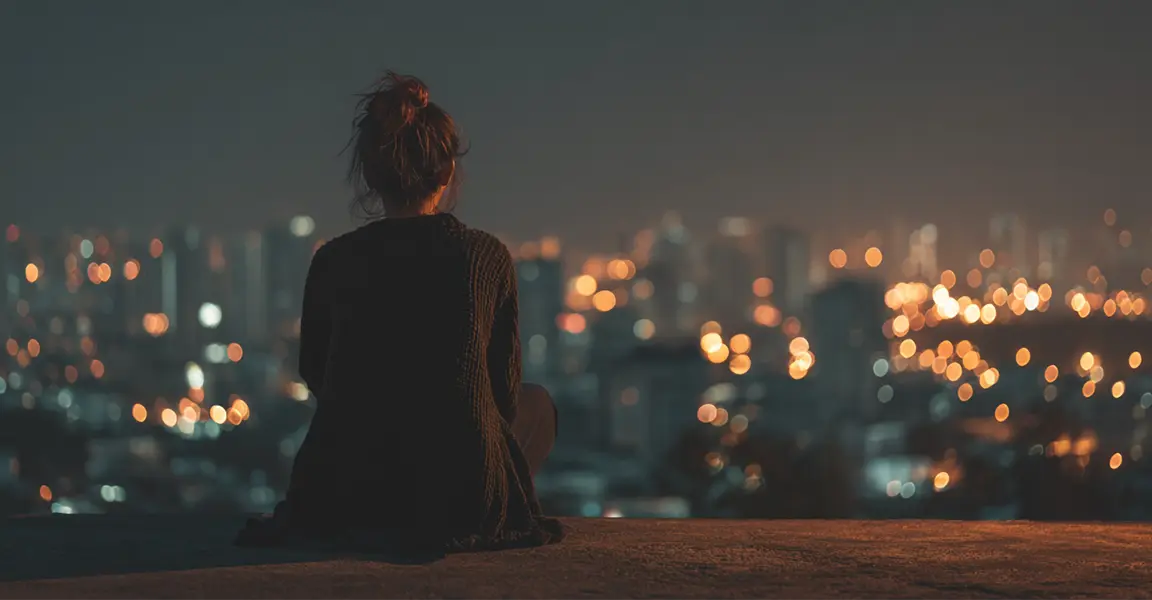
I used to be proud of how much I could carry.
The list of things was long. A full job. A household. Other people's needs, layered on top of my own, layered so deep that my own needs eventually became inaccessible to me, the way the bottom of a deep well is inaccessible to the person standing at the top of it. I could carry the disappointments of people who depended on me. I could carry the moods of people who did not bother to manage their own. I could carry the consequences of decisions I had not made and could not have prevented. I could carry, for years, things that other people would have set down by now, would have refused to pick up in the first place, would have been afraid to be seen near.
I called this strength. Everyone around me called it strength. There is a particular language reserved for women who carry too much, and the language is admiring, and the admiration is part of what kept me carrying. She is so strong. She handles everything. She never complains. I do not know how she does it. I would hear these things and I would feel, briefly, the small lift that recognition produces in any human being, and then I would go back to carrying, because the recognition had not relieved any of the weight. The recognition had only confirmed that I was supposed to keep doing what I was doing.
I want to tell you something about that period of my life now, looking back at it from the other side. What I called strength was not strength. What I called strength was survival, dressed in better clothes.
There is a difference between the two. The difference matters. I did not know there was a difference for a very long time. I think a lot of women do not know.
Strength is a chosen response. Strength is what you do when you have the option of not doing it, and you choose to do it anyway, because the doing of it matters to you, or to someone you love, or to a future you are building that requires the doing. Strength is exerted from a position of reserves. The woman who is strong has something left over after she has done the difficult thing. She has the capacity to refuse the next difficult thing, if the next one is more than she has the resources for. She is operating with margin. She has chosen the load. She can lay it down.
Survival is what you do when you do not have the option. Survival is not a choice. Survival is what the body does to keep the body alive when the conditions of the life have exceeded the resources of the woman living it. Survival is exerted from a position of depletion. The woman who is surviving has nothing left over. She has used what she has, and then she has used the reserves she did not know she had, and then she has used the reserves underneath those reserves, and she is still going, because going is the only option available to her. She is not choosing the load. The load has been placed on her, and continues to be placed on her, and she does not know how to put it down without losing what the load is connected to, which is, in most cases, the rest of her life.
I was surviving for almost twenty years. I called it strength the entire time.
Let me tell you what survival actually feels like, in the body of a woman who has been doing it for a long time. The body keeps a record. The body files reports the woman is too busy to read. The shoulders rise toward the ears, and they stay there, year after year, and the woman stops noticing that her shoulders are not in the position the body had intended. The jaw clenches. The clenching becomes constant. The jaw begins to wake the woman at night, in the small hours, with a pain that is the body's way of asking her, again, to put something down. She does not put anything down. The body files another report.
The sleep gets thinner. The sleep gets shorter. The sleep stops doing the work that sleep was designed to do. The woman wakes more tired than she went to bed. She drinks more coffee. She tells herself this is what mothering is. This is what running a business is. This is what being a good daughter is. The exhaustion becomes the background sound of her life. She does not remember what it was like before the sound began. She has stopped hearing the sound as sound. The sound has become silence to her.
The body knows what is happening. The body has always known. The body had been signaling, throughout the years of survival, in ways the woman had been trained, by everyone around her, not to take seriously. The fatigue was not laziness. The fatigue was a report. The headaches were not stress. The headaches were a report. The gut that was no longer digesting, the periods that had become unpredictable, the small infections that kept returning, the strange new sensitivities to foods she had eaten her whole life, all of these were reports. The body had been speaking. The woman had been pretending she did not hear.
I want to say something about the cultural mythology that taught me to call this strength. The mythology is old. The mythology is widely held. The mythology has done a particular kind of damage to women in this country, especially to Black women, who have been described as strong for centuries by people who needed us to be strong so they could give us more to carry.
The strong Black woman is a stereotype that lives in popular imagination as a tribute. The tribute is, in many ways, a tomb. The strong Black woman is allowed to be strong. She is not allowed to be tired. She is not allowed to be in need. She is not allowed to lay anything down. She is allowed to carry, and the more she carries, the more the praise comes, and the praise sounds like recognition but it functions like a sentence. The praise tells her that the carrying is who she is. The praise tells her that if she stops carrying, she stops being who she is. The praise is a kind of bondage. The bondage is dressed in compliments.
I did not invent this analysis. Black women writers have been making it for generations. Audre Lorde made it. Toni Morrison made it. bell hooks made it. The analysis has been available. The analysis has not been absorbed by the culture that produced the mythology. The culture continues to call Black women strong and to assign us additional carrying based on the strength it has assigned us. The carrying continues. The bodies continue to file reports. The reports go unread. The women die earlier than they should, of conditions that could have been prevented, in part, by the simple act of being allowed to be tired without being seen as failing.
I want to be careful here not to make this only about Black women. The mythology of female strength operates on all women. It just operates with different specifics on different women. The white woman who is admired for her resilience is being trained by a different version of the same training. The Latina woman who is praised for being the rock of her family is being assigned the same carrying. The immigrant woman who is held up as an example of grit is being asked to carry what the system that imported her has refused to carry on her behalf. The carrying is distributed unevenly, but it is distributed widely, and the language of strength has been doing its work on women across categories for a very long time.
What I now call survival is what I did during those years. I survived. I do not regret the surviving. The surviving allowed me to be here, in this body, on the other side of it, writing this now. The surviving kept the people I loved alive when they could not have kept themselves alive without me. The surviving built things that I am still living inside of, things that would not exist if I had not done the surviving I did. I am not asking you to dismiss the surviving you have done. I am asking you to call it what it was. The naming matters. The naming opens up the possibility of not having to keep doing it forever.
Because here is what I learned, when I finally understood what I had been doing.
The naming gave me permission to stop.
The naming told me that what I had been doing was not who I was. The naming told me that the load was not eternal. The naming told me that I could put things down. The naming told me that putting things down was not a failure of the strength I had been told I possessed. The naming told me that the strength had been a story I had been telling myself to make the survival bearable, and that I no longer needed the story, because I no longer needed to survive in the way I had been surviving. The conditions had changed. The conditions had changed in part because I had been changing them, slowly, over years, almost without knowing I was doing it. The work I had been doing to survive had also been work that, accumulated over time, was building the conditions under which the survival would no longer be necessary.
I am not all the way out of survival mode yet. I want to be honest about that. The body still files reports. The shoulders still rise. The sleep is better but not perfect. The instinct to carry is still my first instinct in many situations, and I still have to interrupt the instinct deliberately, every day, in small acts of refusal that feel awkward and that I have to keep practicing in order to make them less awkward. The work is ongoing. The work will probably be ongoing for the rest of my life. The pattern I learned was deep. The pattern goes back generations. I am not going to undo it in one lifetime. I am going to interrupt it. I am going to interrupt it enough that the next generation has slightly less of it to interrupt themselves. That is what I can offer. That is what the work consists of, at this point in my life.
If you are reading this and recognizing the pattern in yourself, I want to say a few things to you, in the spirit of the women who said similar things to me when I was finally ready to hear them.
You are not strong. You are surviving. The naming is not an insult. The naming is an offering. The naming is the first step toward stopping. You have been doing extraordinary work. The work has not been the work you were supposed to be doing for your entire life. The work has been the work that the conditions of your life required, and the conditions of your life were not always conditions you chose, and you do not have to keep being the woman the conditions made you be.
You are allowed to be tired. You are allowed to set things down. You are allowed to let people see you tired, set things down in front of them, refuse to pick the next thing up. The people who admire you for your strength will be confused. Some of them will fall away. Most of them will not. The ones who fall away were admiring the survival, which is to say, they were admiring your willingness to absorb what they did not want to carry. You do not owe them the absorption. You can let them adjust to a new picture of you. You can let some of them not adjust, and you can let those relationships end, and the ending will be uncomfortable and the ending will not destroy you. You will be more yourself, after the ending. You will be less performing the woman they thought you were.
I am writing this on a quiet morning in my house. The light is moving across my kitchen floor. I am drinking coffee that I made for myself, in a cup I chose because I liked it, in a kitchen I keep at a temperature that is comfortable for my body, rather than the temperature that everyone else preferred when I was still organizing my house around their preferences. The coffee is good. The light is good. The morning is mine.
I would not have known how to want any of this twenty years ago. I would not have known that I was allowed to. I would not have understood that the kitchen could belong to me, that the temperature could be mine, that the coffee could be selected for my own pleasure rather than for the pleasure of someone passing through. The not-knowing was part of the survival. The not-knowing has been one of the harder things to give up. I am still giving it up, slowly, one preference at a time, one preference reclaimed for myself, in this kitchen, on this morning, in the life I am still building out of the wreckage of the surviving I have done.
This is not strength. I am no longer interested in being called strong.
This is something else. I do not have a name for it yet. I think I am still in the middle of becoming what comes after survival. Whatever it is, it is mine. The naming will come when it comes. The morning is mine in the meantime. The coffee is mine in the meantime. That is enough, for now. That is more than I had. That is the work continuing, one quiet morning at a time.